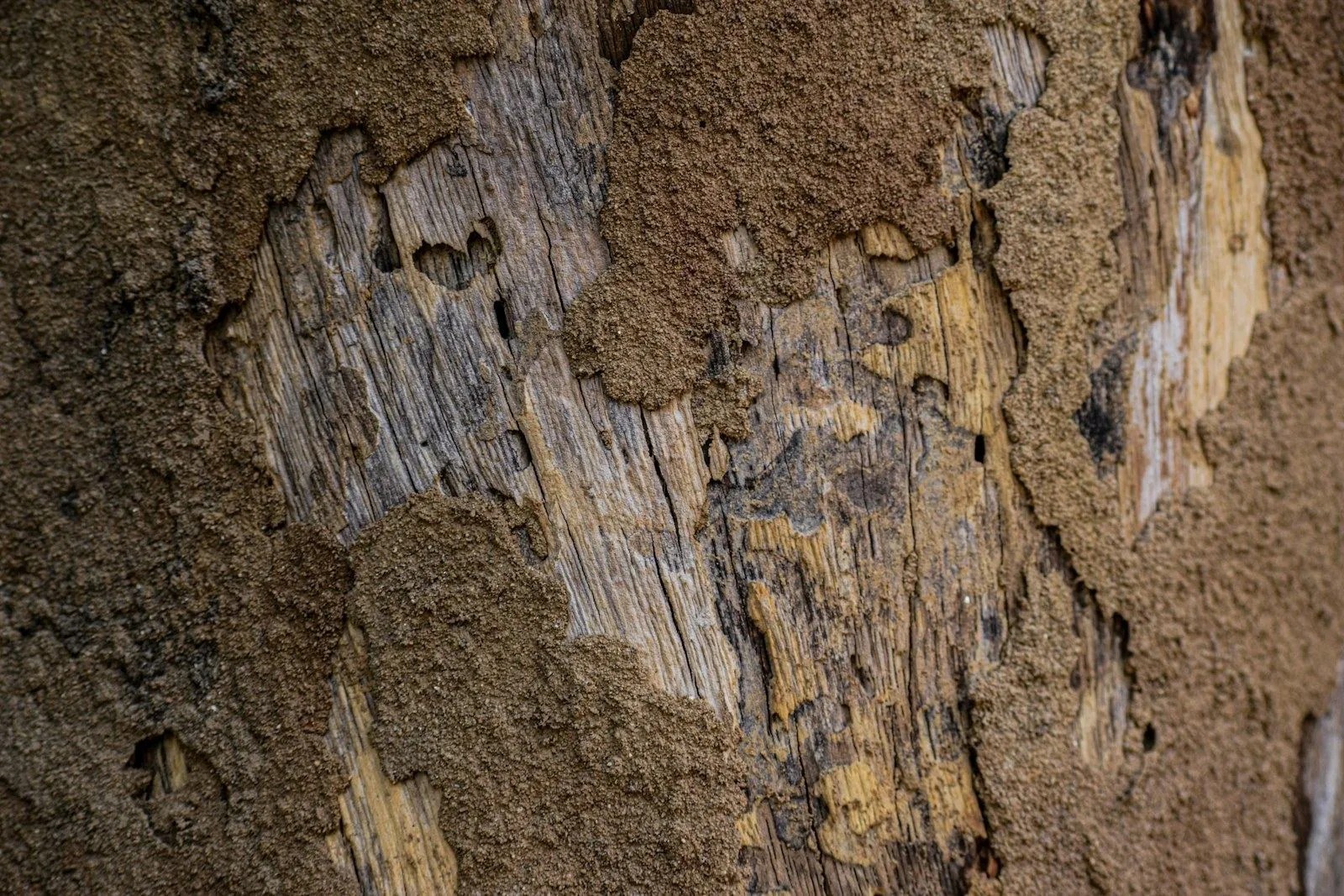
How to tell you have them
In spring, a swarm of small winged termites inside the house, or piles of shed wings on window sills and around doors, is often the first sign. Other signs: pencil-width mud tubes running up the foundation, piers or the inside of the garage wall; wood that sounds hollow when tapped; and paint or drywall that bubbles or sags. Termites and ants are easy to confuse when they swarm. Termite swarmers have straight antennae, a thick waist and two pairs of wings of equal length; ants have elbowed antennae, a pinched waist and shorter hind wings.
What they damage
Subterranean termites eat the cellulose in wood and paper from the inside out: framing, baseboards, door frames, cabinets and stored boxes. The damage usually stays hidden behind walls and under floors until it is extensive. The Formosan subterranean termite, an invasive species established in Florida, forms colonies of millions and can do serious damage faster than the native species.
What treatment looks like
There are two main approaches, and we explain both before any work starts. A liquid treatment puts a termiticide into the soil around and under the house, by trenching along the foundation and drilling through slabs where needed, so termites moving through the treated soil pick it up. A bait system uses in-ground stations around the home, which termites find while foraging; the bait inside slowly disrupts their growth and the colony declines. Termite work always comes with a written agreement that says what is covered.
How long it takes
A liquid treatment of a typical home takes one day. A bait system works over weeks to months, depending on when termites find the stations. On Termite Shield, the monitoring stations are checked at every visit, and the yearly inspection comes with a written report.
Florida notes
In our seasonal model, swarm activity peaks in April. Eastern subterranean termites tend to swarm by day in late winter and spring, and Formosan termites swarm on warm, humid evenings from late spring, often around lights. If you are buying or selling a home, see the WDO inspection page. Subterranean termites are covered on Termite Shield and Complete.